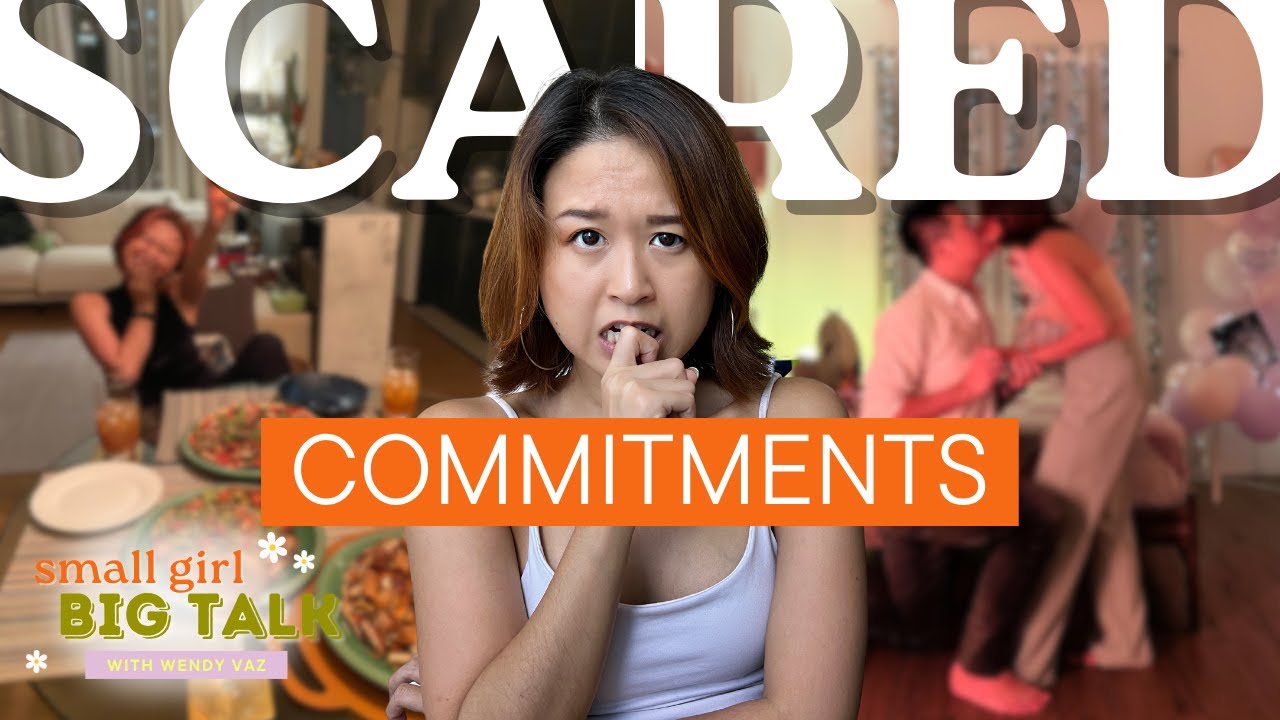
In this episode, we talked about:
- Why fear of commitment is often rooted in fear of making the wrong decision
- How impatience, uncertainty, and “what if” thinking affect relationships
- The link between emotional avoidance and non-commitment
- Why honoring your decisions is key to building long-term relationships
- How commitment requires effort, communication, and responsibility—not just love
Listen to the full episode now:
“You can only know if a relationship will work if you commit to it first.”
Timestamp:
- 0:00 intro
- 2:22 reasons why you have fear of commitment
- 6:34 how we act when we’re afraid of commitment
- 9:55 how do you get over your fear of commitment + relationship advice
- 13:55 summary
- 15:02 outro
“Commitment means honoring your decision, not running away when things get hard.”
Detailed Summary:
Introduction
Commitment can feel terrifying—especially when you’ve seen relationships fall apart or when you’re afraid of making the “wrong” decision. On this episode of Small Girl Big Talk, Wendy opens up about her personal journey from being someone who couldn’t commit to anything—to getting engaged, staying in the same city, and building long-term stability in her life. Through honest reflection, she explores why commitment feels so scary, how fear shows up in our behavior, and what it really takes to overcome it.
Why We’re So Afraid of Commitment
One of the biggest reasons commitment feels overwhelming is the fear of choosing wrongly. Wendy talks about the endless “what ifs” that run through our minds: What if they cheat? What if there’s someone better? What if committing hurts my career, finances, or future dreams? What if I change as I grow older? Because relationships come without guarantees, our minds try to protect us by imagining every possible worst-case scenario.
Another layer to this fear is impatience. In a world where answers are instant and gratification is immediate, relationships demand something different—time, communication, and emotional investment. Wendy highlights how difficult it can be to sit with uncertainty, especially when biological clocks, societal expectations, and personal timelines add pressure to “figure it out” quickly.
Lastly, commitment feels scary because it can feel permanent. Wendy shares her belief that if she chooses marriage, divorce isn’t something she wants to treat lightly. The idea of “no way out” brings up questions about long-term satisfaction, intimacy, and whether a single decision can truly last a lifetime. Even if these thoughts sound uncomfortable, she emphasizes that they’re real and valid concerns many people carry silently.
How Fear of Commitment Shows Up in Our Lives
Wendy reflects on a period in her life when she was deeply afraid of commitment—not just in relationships, but in jobs, places, and routines. During that time, she was struggling mentally, relying on unhealthy coping mechanisms, and moving frequently. Commitment felt impossible because everything felt temporary.
When we’re afraid of commitment, we tend to act based on feelings rather than responsibility. Problems don’t get fixed because it’s easier to run away. Relationships stay shallow or casual because deep investment feels risky. Wendy explains that when you already believe something won’t last, you stop trying to make it better—and that’s when things become toxic, stagnant, or painful for everyone involved.
She also highlights a hard truth: staying in relationships you already know won’t last wastes time—for you and the other person. Emotional attachment deepens regardless of intention, making eventual endings far more painful and preventing you from creating space for something you can truly commit to.
How to Overcome the Fear of Commitment
According to Wendy, the core of overcoming commitment fear isn’t about finding certainty—it’s about learning to honor your decisions. Commitment becomes impossible when you don’t trust yourself to stand by the choices you make.
She explains that this applies not only to relationships, but to careers, businesses, and life in general. Once a decision is made, you must own it. Commitment means accepting that love alone isn’t enough—it requires effort, communication, sacrifice, and responsibility.
Wendy shares how she now approaches her engagement with this mindset. Instead of seeing challenges as exit signs, she sees them as signals to communicate, reflect, and improve. If attraction fades, boredom creeps in, or conflict arises, the solution isn’t escape—it’s understanding, honesty, and growth. That’s why she believes in investing in relationship coaching or counseling, not because something is “wrong,” but because commitment deserves intention and care.
She also acknowledges a reality many avoid: even when you give your best, things still might not work out. But honoring your decision means knowing that if something ends, it wasn’t due to avoidance or fear—it ended after genuine effort. That, she says, is something you can live with without regret.
Conclusion
Fear of commitment doesn’t mean you’re broken—it often means you’re human, cautious, and shaped by what you’ve seen and experienced. Wendy reminds us that while we can’t control outcomes or guarantee forever, we can control how fully we show up. By learning to honor our decisions, commit with intention, and face challenges instead of running from them, commitment becomes less about fear—and more about trust in ourselves.