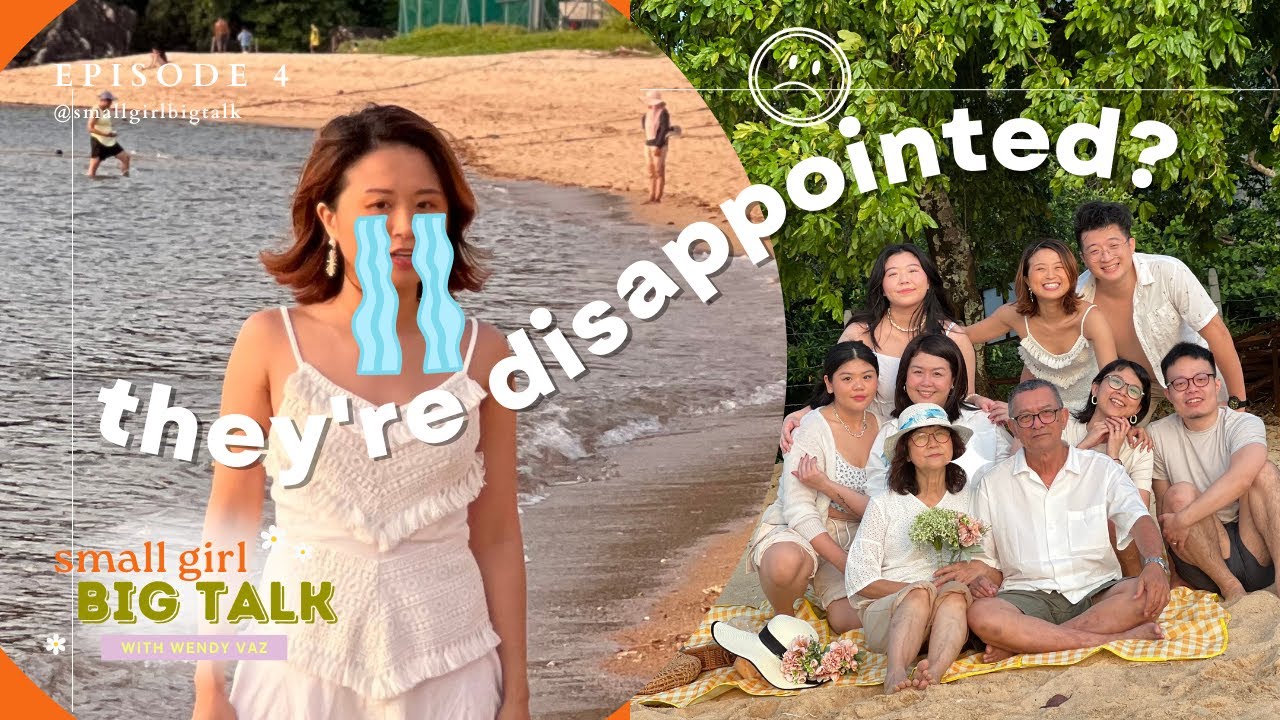
In this episode, we talked about:
- Why family expectations feel heavier as we grow into adulthood
- Generational differences in values, success, and security
- The concept of separating tasks and ownership of life decisions
- How to detach from family expectations without cutting emotional ties
- Why choosing yourself doesn’t mean disappointing your parents forever
Listen to the full episode now:
“Just because your parents are disappointed doesn’t mean they love you any less.”
Timestamp:
- 0:00 intro
- 2:57 family is an interesting concept
- 5:09 parents are also adults trying to figure life out
- 6:52 separation of tasks
- 10:19 how do you detach yourself from your family
- 14:57 summary
- 15:42 outro
“The person who lives with the consequences of the decision should be the one making it.”
Detailed Summary:
Introduction
Spending time with family has a way of surfacing thoughts we try to avoid. On this episode of Small Girl Big Talk, Wendy reflects after a rare full family reunion—four years in the making—and a long stretch of living under the same roof again. Between laughter, chaos, and quiet moments of reflection, one familiar question resurfaced: am I disappointing my parents by choosing my own path?
Growing up, family has always been one of Wendy’s core values. One of her long-term dreams is to retire her parents and give them the freedom they worked so hard for—but not being “there yet” often comes with guilt. This episode explores that tension between honoring family and honoring yourself.
Why Our Parents’ Expectations Feel So Heavy
We’re born into families we don’t choose, raised with values shaped by our parents’ lived experiences. For many Asian households, respect, obedience, and stability are deeply ingrained. As children, we’re rewarded for following the rules and punished for going against them. As adults, even with independence, that conditioning doesn’t just disappear.
Wendy reflects on how difficult it can be when our parents’ vision for our lives—career choices, marriage timelines, financial stability—doesn’t align with what we believe will truly fulfill us. Wanting freedom, meaning, and balance isn’t rebellion; it’s often a generational shift. Our parents value security because of what they lived through. We value flexibility because of what we’ve seen.
Different Generations, Different Definitions of “A Good Life”
Many parents come from generations shaped by scarcity, war, and survival. Stability, a steady paycheck, and a conventional life path represented success. Millennials and Gen Z, however, grew up watching burnout, unfulfilled careers, and emotional distance—and learned to prioritize purpose, mental health, and autonomy instead.
This disconnect isn’t rooted in malice or control; it’s rooted in context. Our parents want the best for us—but their definition of “best” is often based on a world that no longer exists.
Separating Tasks: What Is Actually Yours to Decide?
Drawing from The Courage to Be Disliked, Wendy introduces the concept of separation of tasks. At its core, the question is simple: who bears the consequences of this decision?
Whether it’s choosing a career, getting married, or having children—the person who lives with the outcome is you. While parents may feel responsible or entitled to an opinion, their role is guidance, not ownership. Even when advice is framed as “for your own good,” it often serves their fears, social expectations, or sense of duty as parents.
Understanding this distinction helps loosen the guilt. Disappointing someone doesn’t automatically mean you’re doing something wrong.
Detaching Without Cutting Ties
Detachment doesn’t mean abandonment. Wendy shares that creating physical or emotional space—moving out, living independently, or even having more privacy—can help parents begin to see you as a capable adult rather than a child to manage.
Communication also matters. Explaining why you’re choosing a certain path helps bridge understanding, even if agreement never comes. And when conversations feel too hard, letters or messages can sometimes say what words can’t.
Boundaries, especially in Asian families, can feel taboo—but they’re necessary. Being firm, patient, and consistent gives parents time to observe your growth rather than fear your choices.
Love Doesn’t Disappear Just Because You Choose Differently
Looking back, Wendy realizes that even when she made choices her parents didn’t fully support—choosing her degree, pursuing less conventional career paths—their love never disappeared. Concern doesn’t equal rejection. In many cases, it’s simply love expressed through fear.
Answering her own question, Wendy lands on a gentler truth: yes, parents may feel disappointed at times—but that doesn’t mean they love you less. And it doesn’t mean you’re betraying them by choosing a life that feels true to you.
Conclusion
Choosing yourself can feel selfish when you’re raised to prioritize family—but living a life that isn’t yours comes at a far greater cost. This episode is a reminder that honoring your parents and honoring your individuality don’t have to be mutually exclusive. Growth often requires discomfort, space, and trust—trust that love can survive disagreement, and that choosing your own path doesn’t erase where you come from.