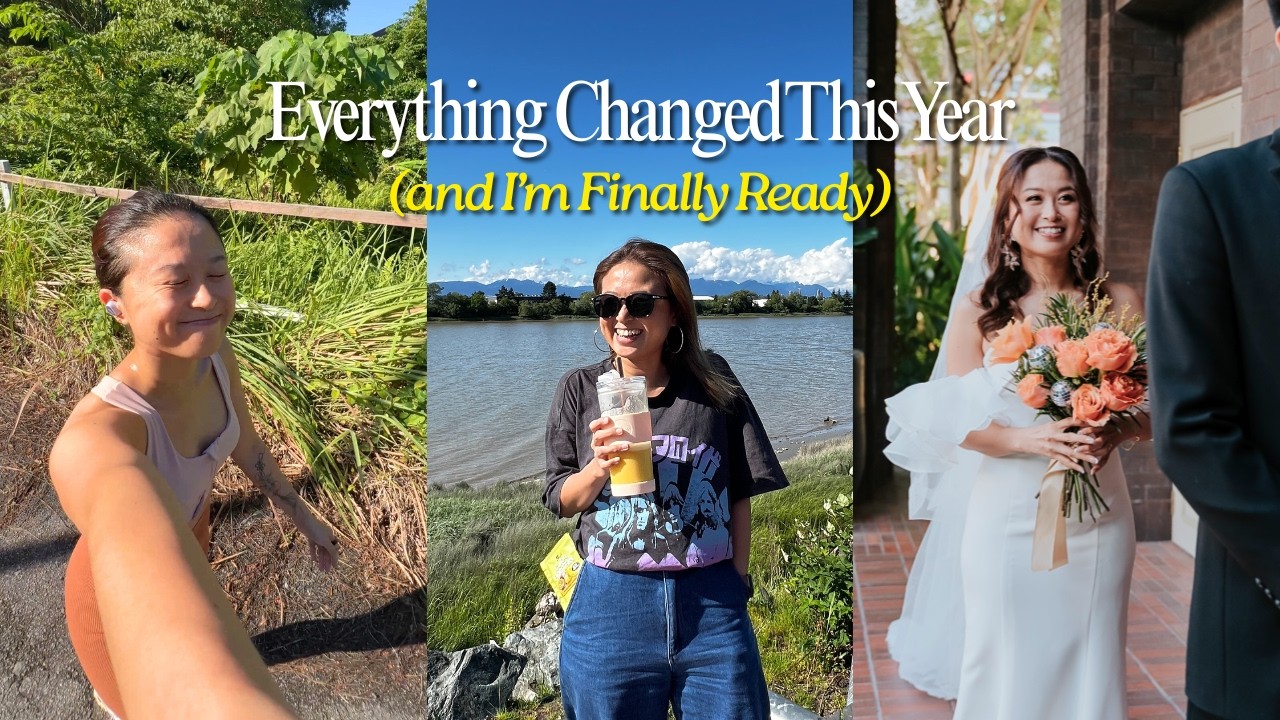
In this episode, we talked about:
- Navigating multiple major life changes at once
- The emotional reality of unexpected transitions
- Letting go of control and regulating fear responses
- Learning to ask for help and receive support
- Shifting from fear-led decisions to peace-led living
- How growth often looks messy before it feels meaningful
Listen to the full episode now:
“If you pray for growth, don’t cry when things start to feel ugly, messy, and tough—that’s what takes you there.”
Timestamp:
- 0:00 why I’m sitting in an empty room talking about change
- 0:39 last day in my old home (empty apartment tour)
- 1:21 expected vs unexpected change (and why both matter)
- 3:05 sitting with discomfort when life feels uncertain
- 4:15 lucky girl syndrome and trusting the universe
- 5:01 being proactive vs reactive in seasons of change
- 5:41 if you ask for growth, don’t cry when it arrives
- 6:22 learning to let go and ask for help
- 7:14 what it means to be a “true villager”
- 8:05 marriage taught me: you don’t have to do everything alone
- 8:39 why I’m glowing through all this change
- 10:00 come along on this new chapter with me
“For the first time in a very long time, my life feels led by peace and alignment instead of fear.”
Detailed Summary:
Introduction
Change is rarely neat or perfectly timed. On this episode of Small Girl Big Talk, Wendy reflects on a year marked by multiple life-altering transitions—getting married, quitting her job, and moving out of a home filled with memories. Sitting in an almost empty living room, she unpacks what it really feels like to grow up: the uncertainty, the emotional whiplash, and the quiet lessons that come from letting go of control.
Rather than presenting change as a linear glow-up, this episode explores the messy middle—the in-between space where excitement, fear, grief, hope, and trust all coexist.
When Change Isn’t Part of the Plan
Some changes are chosen. Others arrive uninvited.
While marriage and a career shift were intentional decisions Wendy had mentally prepared for, being asked to move out of her home was not. The timing—just before her wedding and right after quitting her job—felt disruptive and destabilizing. What started as optimism slowly gave way to frustration when the reality of the new place didn’t match expectations.
This experience highlighted a difficult truth: even when you believe change is happening for you, it can still feel deeply uncomfortable. Growth doesn’t eliminate emotional resistance—it often amplifies it.
Letting Go of Control and Choosing Trust
As emotions swung between hope and fear, Wendy realized that the only thing she truly had control over was her response. Instead of reacting from panic, she focused on regulating her nervous system—slowing down, breathing, and making grounded decisions rather than fear-based ones.
This mindset shift became especially important when faced with overlapping stressors: a housing transition, starting a business, and losing the financial predictability of a full-time job. Rather than abandoning her plans out of fear, she chose to trust that she was ready for this next phase.
Growth, she reflects, often looks nothing like the version we imagine—but that doesn’t mean it’s wrong.
The Cost of Growth Is Messiness
We often pray for growth while secretly hoping it will arrive gently. This episode challenges that illusion.
Wendy speaks candidly about how personal growth rarely feels aesthetic or empowering in real time. It’s inconvenient. It’s exhausting. It arrives when you least have the capacity for it. And yet, that discomfort is often the very thing that creates expansion.
The move became a living example of this truth—happening at the worst possible time, yet forcing new ways of coping, communicating, and asking for help.
Marriage, Support, and Learning to Receive
One of the most powerful shifts Wendy shares is learning to release her hyper-independence. Instead of managing the move herself, she asked her husband Kevin to take the lead—something that felt deeply unfamiliar.
Through this, she witnessed a different way of moving through life: one rooted in community, reciprocity, and trust. Kevin’s ability to show up for others had quietly built a “village,” and when Wendy needed support, that village showed up in return.
This chapter of her life revealed that strength doesn’t always look like doing everything alone—sometimes it looks like allowing yourself to be held.
From Fear-Led to Peace-Led Living
Perhaps the most profound realization in this episode is the internal shift Wendy feels. The “glow” people have noticed isn’t just from marriage—it’s from surrendering control, releasing fear-driven decisions, and choosing alignment instead.
For the first time in a long while, her life feels led by peace rather than obligation, expectation, or survival. And while the future is still uncertain, it feels expansive rather than threatening.
Conclusion
This episode is a reminder that transformation often arrives layered, inconvenient, and emotionally complex. Big life shifts rarely happen one at a time—and when they collide, they ask us to grow faster than we feel ready for. But through surrender, trust, community, and nervous system regulation, change can become something we move with rather than fight against. Growth doesn’t require certainty—it requires courage, support, and the willingness to let life unfold in its own imperfect way.