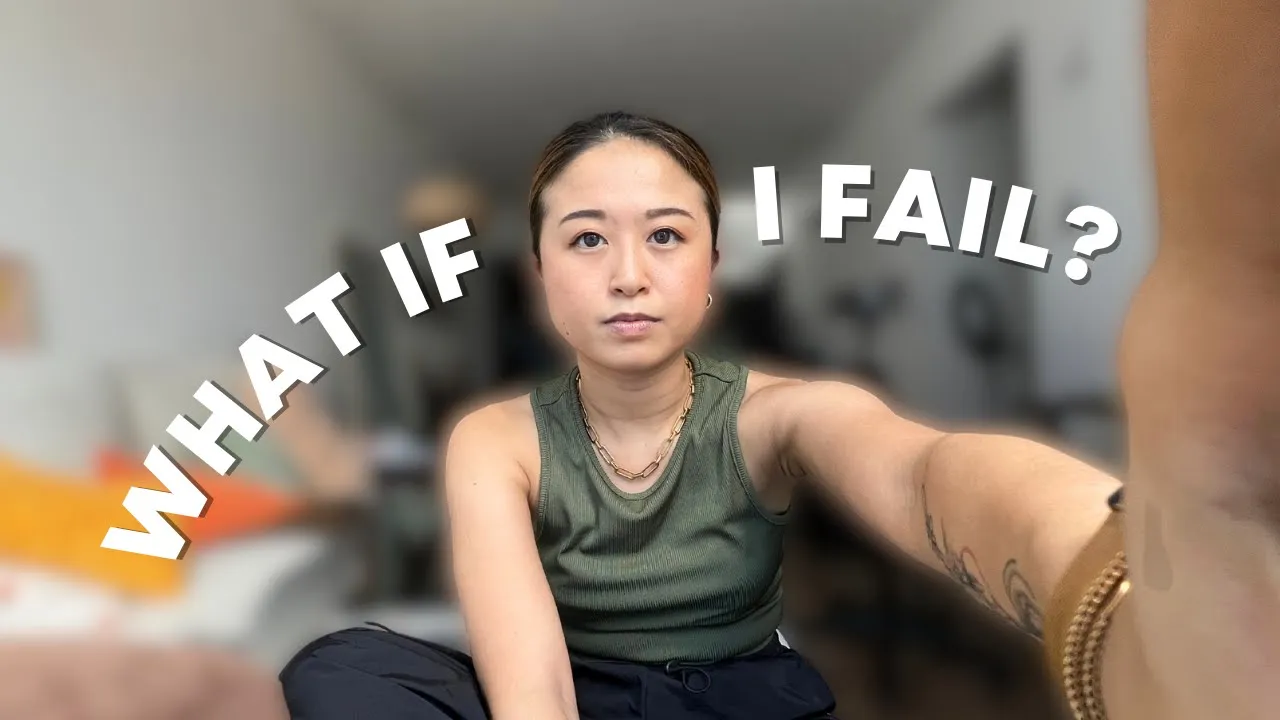
In this episode, we talked about:
- The high achiever mindset and pressures from early success
- Transitioning into adulthood and defining your own success
- Learning from failure and reframing setbacks
- Letting go of ego and past accomplishments
- Taking risks and embracing unconventional paths
- Practicing self-acceptance and celebrating growth
Listen to the full episode now:
“Overcoming fear of failure requires letting go of your past, your ego, and your fear of disappointing others.”
Timestamp:
- 0:00 intro
- 2:00 the definition of success
- 5:38 our need to play safe because the price of failure is higher
- 8:00 but what if your goals are so much more that what you’re settling for?
- 11:31 remove your ego by having a hard reset
- 14:29 fail more often so we get used to it
- 16:02 main message
- 17:07 outro
“Your 20s are meant for self-discovery—experiment, learn, and define success on your own terms.”
Article mentioned in this episode:
https://www.cnbc.com/amp/2017/05/24/what-happened-to-your-class-valedictorian-probably-not-much.html
Detailed Summary:
Introduction
In this episode of Small Girl Big Talk, Wendy shares her personal journey of recognizing and navigating her fear of failure as a high achiever. She explores how early success can create pressure, the challenges of transitioning into adulthood, and how to reframe failure as a learning opportunity. The episode encourages self-acceptance, letting go of ego, and embracing the process of growth.
The High Achiever Mindset and Early Pressure
- Student Success Formula: Wendy explains how academic success is often formulaic—good grades, completing assignments, extracurriculars—but adult success is less defined and more personal.
- Transition to Adulthood: Once you graduate, your definition of success becomes self-determined and unique to your values and goals.
- Pressure and Expectations: High achievers often carry external expectations, making it harder to take risks or pursue unconventional paths.
Defining Success on Your Own Terms
- Individualized Success: Success looks different for everyone—financial stability, social recognition, personal fulfillment, or creative achievements.
- 20s as Self-Discovery: Wendy emphasizes that your 20s are for experimentation, learning, and exploring what truly matters to you.
- Beyond Conventional Paths: Achieving greatness often requires breaking rules, taking risks, and pursuing unique visions beyond the traditional career path.
Learning from Failure
- Valedictorian Study Insight: Wendy cites a study where top academic performers rarely create groundbreaking change later in life, illustrating that past achievements don’t guarantee adult success.
- Failure as Feedback: Failure is a necessary part of learning; each mistake provides insight, allowing for growth and improvement.
- Redefining Failure: You only truly fail when you stop trying or give up entirely.
Letting Go of Ego and Past Accomplishments
- Heart Reset: Wendy discusses the importance of resetting your mindset upon entering adulthood, treating it as a fresh start.
- Adult Age Concept: Think of turning 18 as a “newborn in the adult world”—learning, experimenting, and growing like a toddler in adulthood.
- Celebrating, Not Carrying, Past Achievements: Acknowledge past successes, but don’t let them define your current identity or limit your future growth.
Practical Lessons and Mindset Shifts
- Embrace Risk: Avoid playing it safe purely to meet expectations; take calculated risks to achieve meaningful success.
- Celebrate Failures: Each failure brings you closer to success. Get comfortable with making mistakes.
- Self-Acceptance: Overcoming fear of failure involves accepting who you are, your current circumstances, and trusting your growth process.
Conclusion
Wendy encourages listeners to redefine their relationship with failure, embrace learning through mistakes, and approach adulthood with a growth mindset. By letting go of past accolades and external expectations, high achievers can pursue meaningful success while cultivating self-acceptance and resilience.